
Introduction
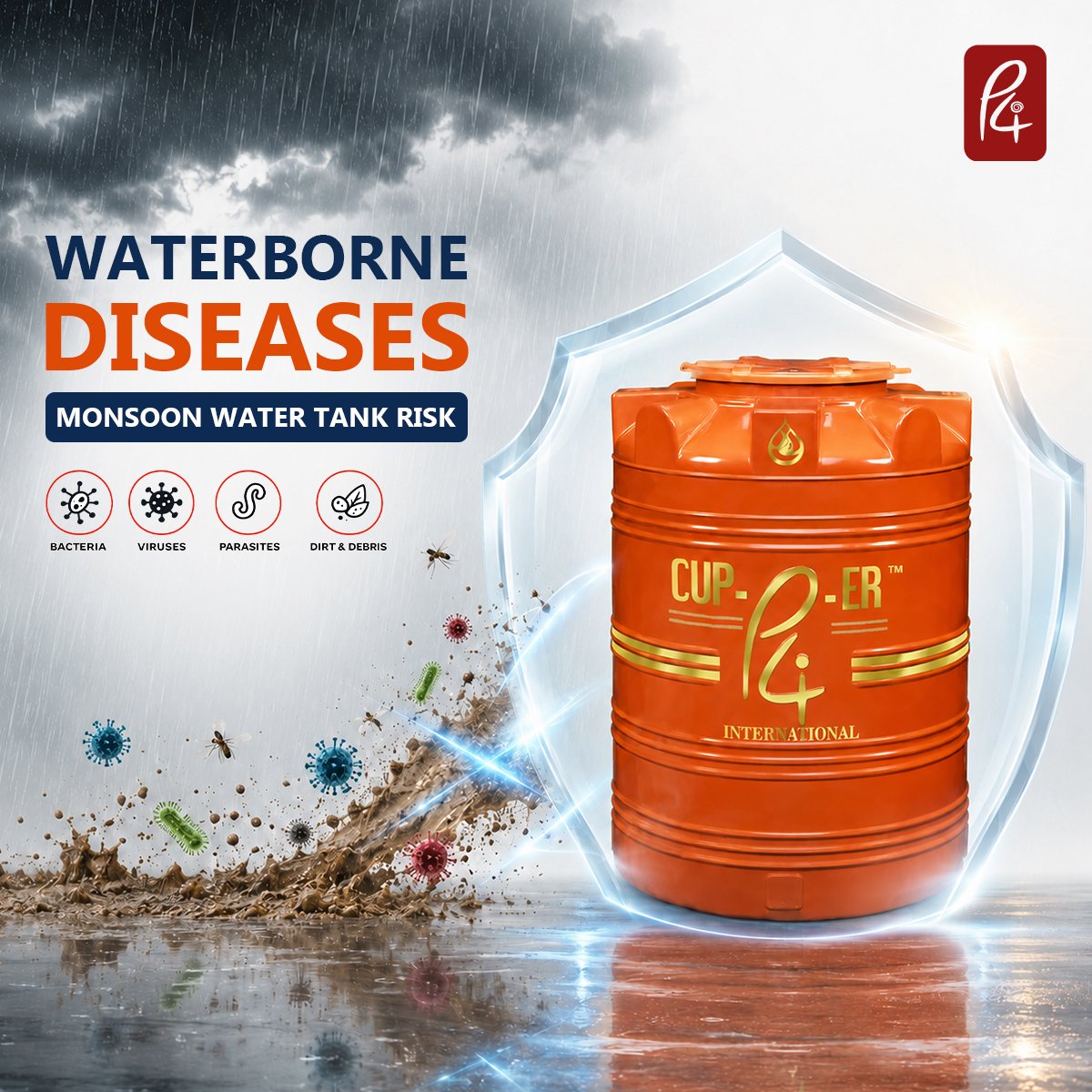
Every monsoon, hospitals across India see a predictable spike in cases of typhoid, cholera, jaundice, and diarrhoeal illness. Most households blame the obvious culprits — street food, flooded roads, contaminated municipal supply. Few think to check the tank sitting quietly on their own rooftop, even though it’s often a direct contributor to the problem.
Monsoon conditions create the exact environment waterborne pathogens need to thrive: warmth, moisture, organic debris, and — critically — a storage tank that isn’t being checked as often as it should be.
Why Monsoon Season Is High-Risk for Water Contamination
Three factors combine every monsoon to raise contamination risk specifically around household water storage:
1. Municipal water quality dips. Heavy rainfall increases silt, runoff, and occasional sewage overflow into water sources, putting extra strain on treatment systems. Even treated water reaching your home can carry a higher contamination load during peak monsoon weeks.
2. Tanks accumulate debris faster. Wind-blown leaves, dust, and rainwater runoff find their way into poorly sealed inlets and lids far more easily during monsoon than in dry months.
3. Warm, humid conditions accelerate microbial growth. Bacteria, algae, and mosquito larvae all multiply faster in warm, damp environments — exactly what a partially sealed rooftop tank offers during a humid monsoon.
The result: a tank that was perfectly fine in April can become a genuine health risk by July if it hasn’t been checked.
The Waterborne Diseases Monsoon Season Brings
Typhoid fever — caused by Salmonella typhi, spread through water contaminated with fecal matter. Symptoms include prolonged fever, weakness, and abdominal pain, and cases rise sharply in India during and after monsoon.
Cholera — an acute diarrhoeal infection caused by contaminated water, capable of spreading rapidly in areas with compromised water and sanitation infrastructure. Monsoon flooding is a well-documented trigger for localized outbreaks.
Hepatitis A and E — viral infections transmitted through contaminated water, affecting the liver and causing fatigue, jaundice, and in some cases more serious complications. Both see seasonal upticks tied to water quality.
Diarrhoeal diseases — the most common monsoon-linked illness overall, ranging from mild discomfort to severe dehydration, particularly dangerous for young children and the elderly.
Leptospirosis — a bacterial infection spread through water contaminated by animal urine, particularly relevant in flood-prone areas where rooftop and ground-level water sources can mix.
None of these require dramatic contamination to take hold — even a small, ongoing source like an unsealed or poorly maintained tank can be enough over weeks of exposure.
How Your Water Tank Can Become the Hidden Source
A water tank doesn’t need visible dirty water to be a contamination risk. The most common ways a tank contributes to monsoon-season illness are quiet, cumulative issues:
- A loose-fitting or cracked lid allowing rainwater runoff, dust, and debris to enter directly
- An overflow pipe without proper mesh covering, giving insects, rodents, or small animals a route in
- Algae growth on the tank’s inner walls, often from a degraded or missing light-blocking middle layer
- Sediment buildup at the tank base, which can harbour bacteria even when the water above looks clear
- Infrequent cleaning schedules — many households clean tanks once a year, typically before summer, leaving the tank unchecked through the exact season when risk is highest
The uncomfortable reality: water can look completely clear and still carry the pathogens responsible for typhoid or diarrhoeal disease. Visual inspection alone isn’t a reliable safety check.
Warning Signs Your Tank Needs Immediate Attention
Check for these signs at the start of monsoon season, not just when a problem becomes obvious:
- Musty or unusual smell from tap water
- Visible sediment or particles when water is drawn
- A green tint on the tank’s inner walls (algae)
- Cracks, gaps, or a poorly fitting lid
- Increased frequency of stomach upset in the household with no other clear cause
- Insects or larvae visible near the tank inlet or overflow
If any of these apply, don’t wait for the scheduled annual cleaning — address it immediately.
How to Protect Your Household This Monsoon
1. Inspect the lid and seals before the rains start. A tight-fitting, undamaged lid is your first line of defence against contamination entering from outside.
2. Check and clean the overflow pipe mesh. This small, often-overlooked component is a common entry point for debris and pests.
3. Clean the tank at the start of monsoon, not just before summer. Most households default to a pre-summer clean and skip a monsoon check — reversing or adding to that schedule closes a real seasonal gap.
4. Choose a tank with genuine multilayer, light-blocking construction. This significantly reduces algae growth even during warm, humid conditions, compared to tanks without a proper middle layer.
5. Boil or filter drinking water as an added precaution during peak monsoon weeks, particularly if your area has a history of municipal supply issues during heavy rainfall.
6. Monitor for early symptoms — persistent fever, unusual fatigue, or ongoing digestive issues in the household warrant medical attention promptly rather than being dismissed as “seasonal.”
7. If your tank is more than 5–7 years old, monsoon season is a good checkpoint to evaluate whether degradation (cracking, discolouration, brittleness) has quietly increased your risk year over year.
Why Tank Quality Matters More Than People Realise
A well-built, certified, multilayer tank isn’t just about durability — it’s a genuine barrier against the exact conditions monsoon creates. A UV-stabilised outer shell resists the cracking that lets rainwater and debris in; a proper light-blocking middle layer prevents the algae growth that thrives in monsoon humidity; and food-grade construction reduces the chance of the tank itself contributing contaminants on top of whatever risk already exists in the water supply.
Households that treat their tank as part of their health infrastructure — not just plumbing — consistently report fewer water-related issues through the monsoon months.
Frequently Asked Questions
Can waterborne diseases really come from a home water tank, not just outside water sources? Yes. Even when municipal water enters clean, a contaminated or poorly maintained tank can introduce bacteria, algae, or debris before the water ever reaches your tap.
How often should I clean my tank during monsoon? At minimum, inspect it at the start of monsoon season and clean it if there’s any sign of debris, sediment, or algae — don’t wait for the standard annual cleaning cycle alone.
Is boiling water enough protection even if my tank is contaminated? Boiling kills most pathogens in the water itself, but doesn’t address an ongoing contamination source — a compromised tank will keep reintroducing risk with every refill. Fixing the source matters as much as treating each batch of water.
What’s the single most important tank check before monsoon? The lid and seal. A tight, undamaged lid prevents the majority of external contamination sources — rainwater runoff, debris, and pests — from entering in the first place.
Are children more at risk from monsoon waterborne illness? Yes — children, along with elderly and immunocompromised family members, are generally more vulnerable to dehydration and complications from waterborne diseases, making household water safety especially important for families with young children.
Don’t Wait for Symptoms to Check Your Tank
Monsoon-season waterborne illness is largely preventable with basic, timely tank maintenance — but it requires checking before the rains arrive, not after symptoms show up. Inspect your seals, clean where needed, and consider whether your current tank’s construction is actually built to handle the conditions this season creates.
Looking to upgrade to a tank built for India’s monsoon conditions? Explore P4 International’s multilayer, IS 12701-certified range. [CTA → Product range]