


Product. Categories

Tanks
Pipes
Kitchen Sink
PTMT
CP Fittings
Sanitary
Others
Product Categories
Tanks
Pipes
Kitchen Sink
CP Fittings
PTMT
Sanitary
Others
P4 on Reels
Tap a reel to watch with sound, or shop the product below it
Revolutionizing Purity & Wellness
Advanced Silver Alkaline Products for Optimal Well-being
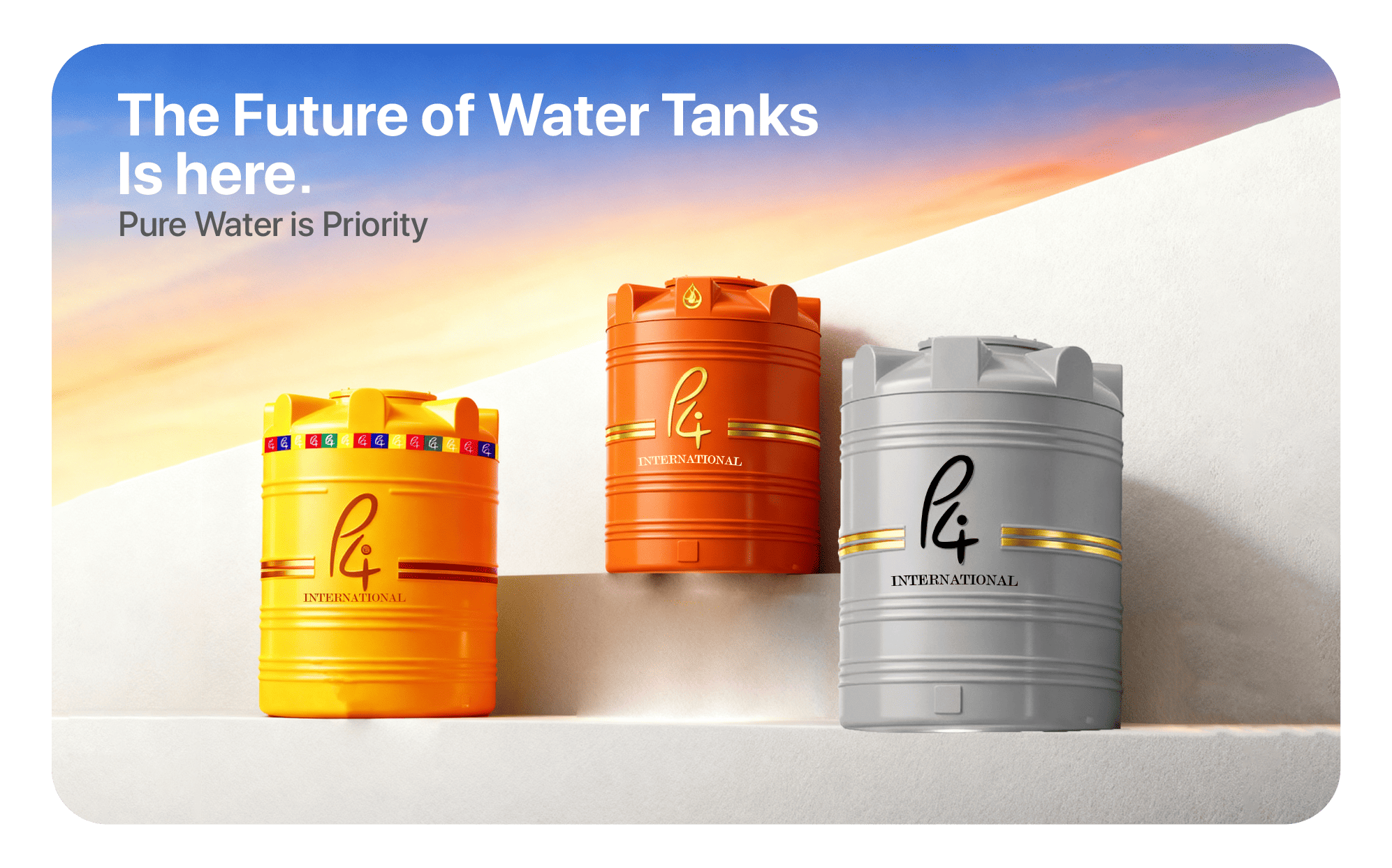
Explore Our Product Videos
Technology
Odourless & Food Grade Suitable Drinking Water Tanks.
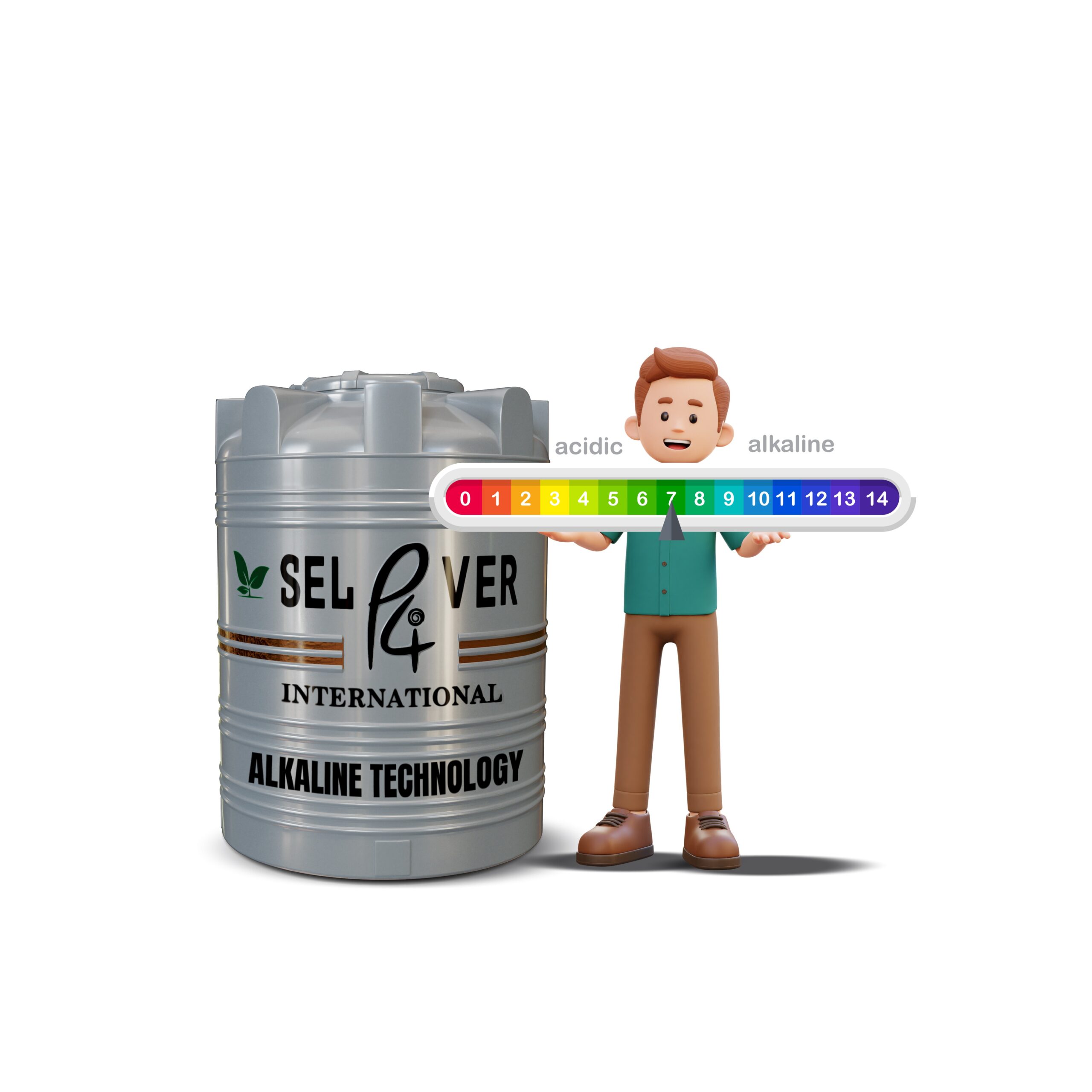
The system ensures superior water quality that meets IS 10500 drinking water standards, enriched with essential minerals to enhance both taste and health.
Alkaline water flows through every tap in your home, providing clean, healthy water for all household needs, including drinking water.
The system delivers water enriched with essential minerals like zinc, copper, calcium, and magnesium to support overall wellness.
Water with a pH level up to 9 and more than 125 TDS ensures high-quality alkaline water for better hydration and health.
The system offers 99.9% protection from water-borne diseases such as Giardia, Hepatitis A, Cholera, Diarrhea, Botulism, and Typhoid fever.
Alkaline water flows from every tap and pipe, ensuring consistent health benefits across your household.
- For immunity: Zinc supports immune health.
- For stronger bones & teeth: Calcium strengthens bones and teeth.
- For viral protection & anti-aging: Copper aids in tissue repair and longevity.
- For better brain function: Magnesium improves cognitive function and helps relieve headaches and anxiety.
Technology
Odourless & Food Grade Suitable Drinking Water Tanks.
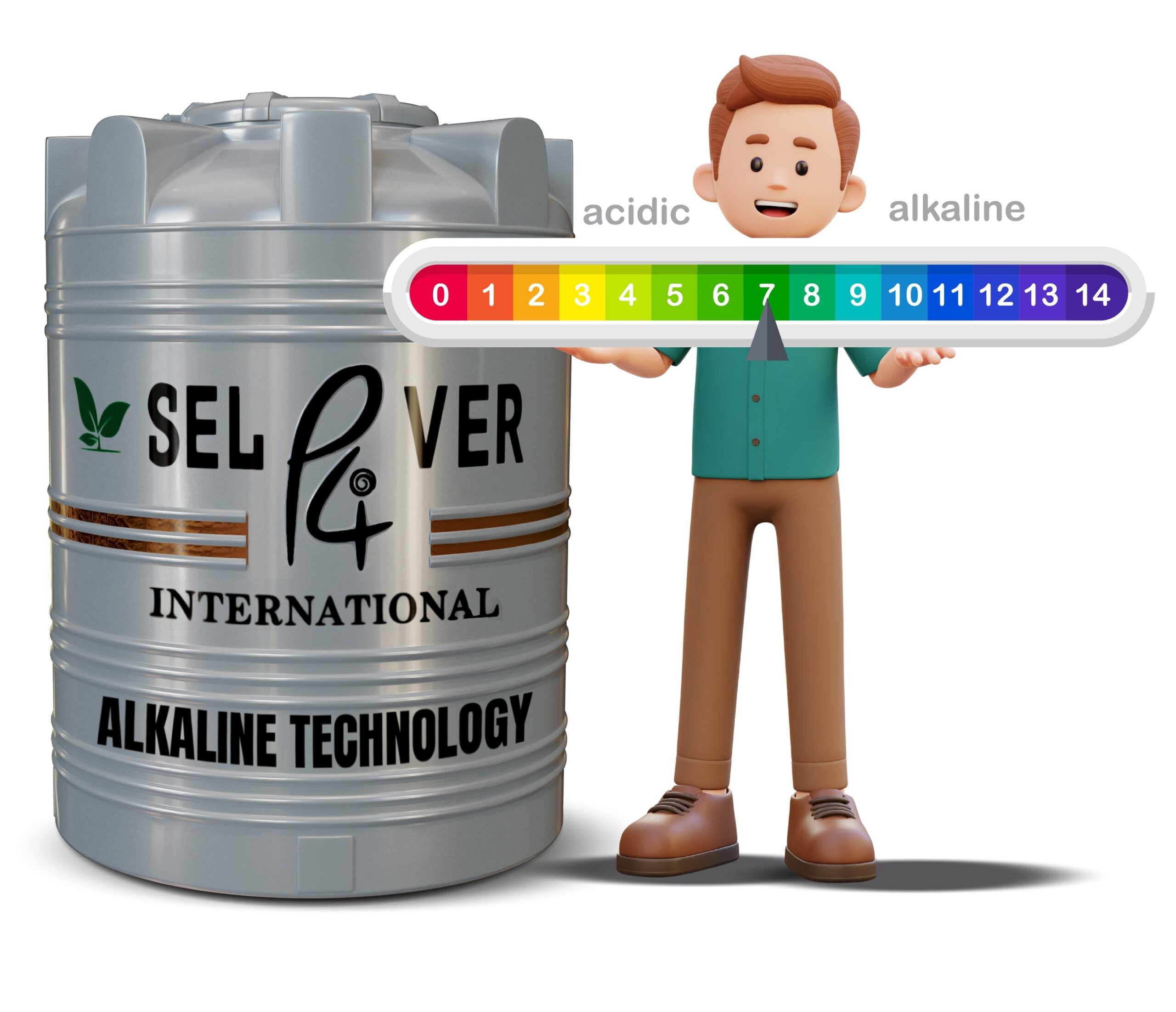
Provides naturally balanced alkaline water that supports hydration, helps neutralize acidity,
and promotes overall wellness for the entire family.
Preserves water freshness over time with advanced material layers, ensuring hygienic storage
and long-term usability.
Helps support hydration and immunity through antioxidant-enhanced alkaline water for your
whole household.
Incorporates silver ion technology that inhibits microbial growth and maintains safe, clean
water throughout the tank.
Safe for daily use on skin, hair, eyes, and even in food prep—water remains 99.9% free from
harmful bacteria and viruses.
Soft, mineral-rich water reduces skin dryness and hair damage caused by harsh hard water,
promoting everyday wellness.
- Advanced anti-scaling tech minimizes calcium/lime deposits in pipelines and appliances,
extending their lifespan and efficiency.
- Comes with a protective external skin Jacket layer that shields the tank from UV rays,
temperature extremes, and external damage—enhancing both durability and aesthetics.
P4 Water Storage Solutions
We completely following the strict & hygieneic process

Find the Best Fit for Your Home
Not sure which P4 tank to pick? Answer three quick questions and we’ll match you with the right one.
Find Your Perfect Water Tank
Tell us about your family and what matters most to you. We’ll suggest the right size and the P4 tanks that suit your home.
Start nowTalk to a Tank Expert
Prefer to ask a person? Message our team on WhatsApp for sizes, prices and installation help.
WhatsApp usFind the Right Water Tank for Your Home
Answer a few simple questions to discover the ideal P4 tank for your household.
How many people live in your home?
This helps us work out the right storage size for you.
What matters most to you in a water tank?
Pick as many as you like. We’ll match tanks to everything you choose.
0 selectedWant an extra hidden water reserve underground?
An underground tank stores extra water out of sight, stays naturally cool and keeps your rooftop free. A smart backup when supply is irregular.
Latest Blog Updates
September 27, 2026
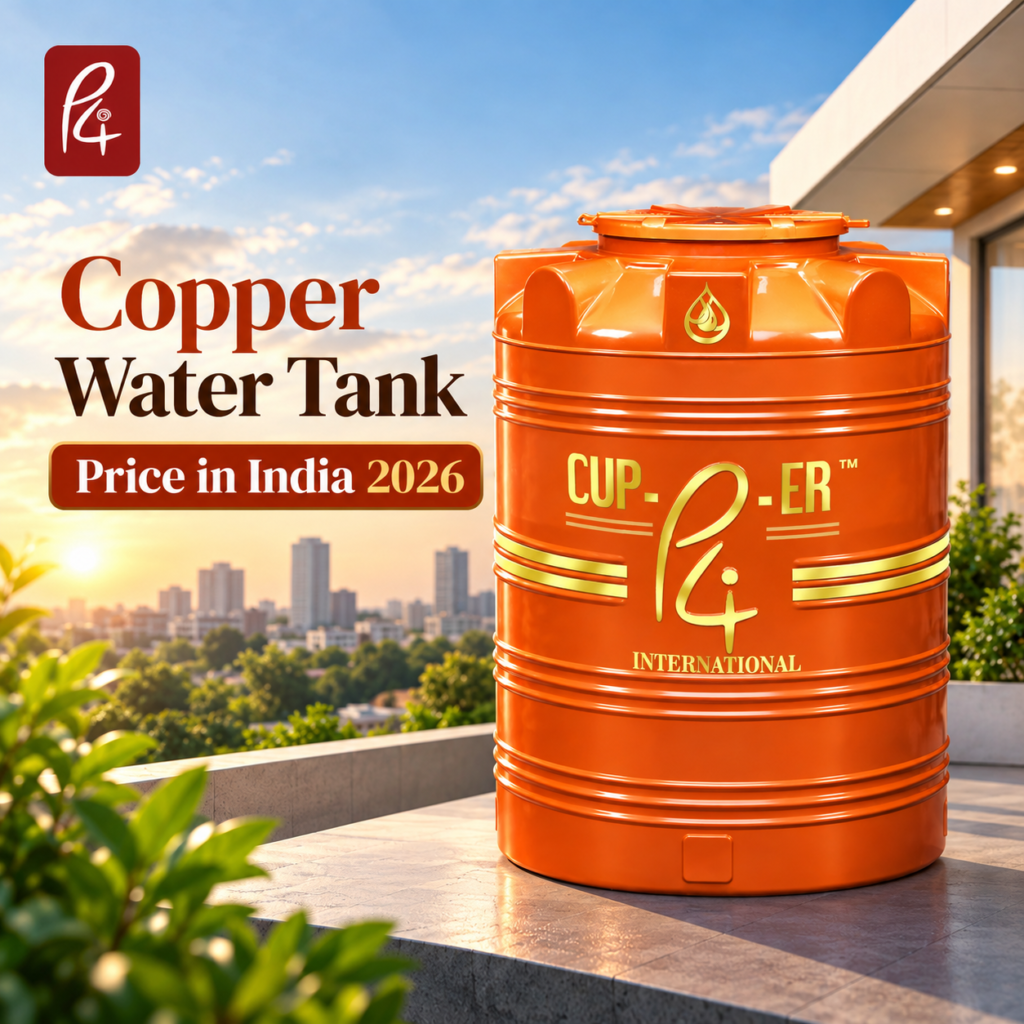
A copper water tank costs more than a standard tank of the same size, and the gap widens as capacity grows. P4’s shop lists the P4 International Copper Technology Water Tank at an MRP of ₹24,000 to ₹64,000, depending on whether you pick 750, 1,000 or 2,000 litres. The rest of this page explains what drives that price and how to decide whether it’s worth paying.
You probably want the numbers first, so here they are.
P4 Copper Tank Price by Capacity
| Capacity | Suits | Approx. MRP |
|---|---|---|
| 750 L | A family of 3 to 4 | about ₹24,000 |
| 1,000 L | A family of 4 to 5 | about ₹32,000 |
| 2,000 L | A large family or a small building | about ₹64,000 |
These approximate MRPs are worked out from the ₹24,000 to ₹64,000 range on the P4 shop, using the per-litre rate at both ends of it. Prices change from time to time and dealers often sell below MRP, so ask your nearest dealer for the exact figure on the day you buy. Delivery, the stand and installation may be quoted on top. P4 also says it offers installation services, bulk discounts on large orders and financing through partner companies, so ask about those when you request a quote.
Why a Copper Tank Costs More Than a Standard One
Copper is a metal whose price rises and falls with the market, and it comes on top of everything a standard tank already needs. Four things account for most of the difference.
- Material. P4’s metal technology bonds polymer with copper in nano form, so the stored water gets the benefit of the metal. The shop names the tank “Copper Technology Water Tank with Inner & Outer Real Copper”.
- A deeper build. The shop lists the copper tank as a 6-layer tank. More layers means more material and more moulding work.
- Extra storage built in. P4 sells the copper tank with “30% extra storage capacity” in the same footprint.
- Smaller production runs. Fewer copper tanks are made than standard ones, so costs are spread over fewer units.
What Else Changes the Price You Pay
- Capacity. A bigger tank costs more in total and less per litre.
- Model. P4 lists several lines at different prices, from a 5-layer PUF foam-insulated International tank to the silver series. Copper sits in between.
- Location. Delivery distance and dealer margins vary between Kolkata, Delhi, Bengaluru and smaller towns.
- What’s included. Stand, fittings and installation are often quoted separately.
How to Compare Copper Tank Prices Properly
Divide the price by the capacity in litres. That gives you the cost per litre, the only fair way to compare a 750 L tank with a 2,000 L one. Try it on the shop’s own range: ₹24,000 divided by 750 litres is ₹32 per litre, and ₹64,000 divided by 2,000 litres is also ₹32 per litre. MRP seems to scale roughly with size, which puts a 1,000 L tank near ₹32,000. Treat that as an estimate and ask the dealer for the exact figure.
Cost per litre can mislead in one way. Because P4 sells the copper tank with 30% extra storage, a “1,000 L” tank may hold more than 1,000 litres in practice. Compare on the labelled capacity, then ask the dealer what the tank actually holds.
And the lowest cost per litre doesn’t make the biggest tank the best buy. Put 2,000 litres in a household that uses 600 a day and the water sits for days before anyone drinks it.
How Much Capacity Do You Need?
Municipal planners in India commonly work with about 135 litres per person per day for household use. For a family of four, that’s 540 litres a day. A 1,000 L tank covers a little under two days of full use, a comfortable buffer if your supply is irregular. Our 1000 litre water tank price guide shows how the other sizes compare.
Say five people live in your house and you have no sump. That’s 675 litres a day. A 1,000 L tank covers about a day and a half, and a 2,000 L tank almost three days, which sounds safer until you notice the water at the bottom has sat there for most of that time. For this household, 1,000 L is the sensible pick. If your supply fails often, add a sump or a second tank instead of one oversized tank.
Is a Copper Tank Worth the Premium?
It depends on what you want from it. Copper’s effect on bacteria on surfaces is well documented in lab studies, and copper vessels have been part of Ayurvedic water practice for a very long time. Neither fact turns a tank into a purifier. A copper tank still needs cleaning every 6 to 12 months, and it won’t remove chemical contaminants if your source water has them. Our guide to the benefits of a copper water tank goes into the detail.
Our view: if drinking-water quality is your main concern and you already clean your tank on schedule, the premium is easy to justify. If the budget is tight, spend first on a certified food-grade tank and a cleaning routine. Add copper later.
| Factor | Copper tank | Standard food-grade tank |
|---|---|---|
| Upfront price | Higher | Lower |
| Cleaning | Every 6 to 12 months | Every 6 to 12 months |
| Traditional copper-water association | Yes | No |
| Taste | A faint metallic note for some people | Neutral |
| Certificate to ask for | IS 10146 / IS 10500 for the model | IS 10146 / IS 10500 for the model |
Costs and Mistakes to Watch For
- Platform or stand. A full tank needs a level base that can take its weight.
- Fittings and labour. The float valve, unions, overflow mesh and plumber’s charge are usually separate.
- Skipping the certificate. Ask for it instead of trusting a sticker.
- Expecting copper to replace cleaning. It doesn’t.
Questions to Ask the Dealer Before You Pay
- Is the price the MRP, and does it include delivery and the stand?
- How many years is the written warranty, and what does it cover? P4 says every tank carries a manufacturer’s warranty.
- Can I see the IS 10146 / IS 10500 certificate for this exact model? P4 lists these on its website.
- What capacity does the tank actually hold, given the 30% extra storage?
Copper Water Tank Price: FAQs
What is the price of a 1000 litre copper water tank?
The P4 International Copper Technology tank in 1,000 litres has an MRP of about ₹32,000 on the P4 shop. Dealer quotes differ by city and by what’s included, so ask for an itemised price.
Is a copper water tank worth buying?
It is if you want copper-contact water for the whole household and accept paying more for it. It isn’t if all you need is basic storage at the lowest cost.
Does a copper tank need special cleaning?
Clean it on the same 6 to 12 month schedule as any tank. As a general rule, avoid harsh acids and abrasive scrubbing on any metal part.
Will the water taste of copper?
Some people notice a faint metallic note, especially in the first weeks. Many notice nothing at all.
Does P4 offer installation and financing?
P4’s website says it offers installation services, bulk discounts for large orders and financing through partner companies. Contact the sales team for terms.
Where can I buy a P4 copper tank?
P4 sells through 300+ dealers across India and online. Use the store locator on the P4 website to find a dealer near you, or buy it on the P4 shop.
See the P4 International Copper Tank and get a quote from your nearest dealer.
September 24, 2026
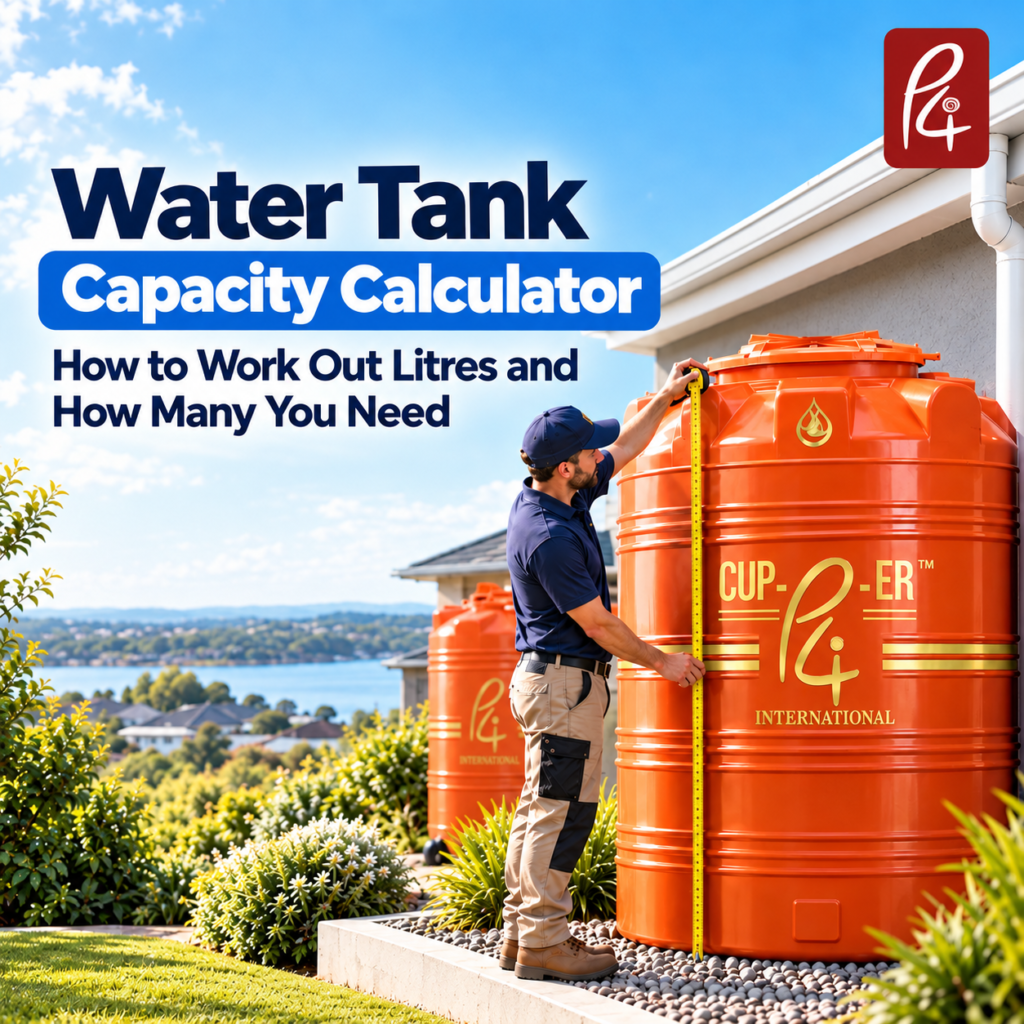
To find a rectangular tank’s capacity, multiply length × width × height in metres to get cubic metres, then multiply by 1,000 for litres. In feet, multiply the cubic feet by 28.3 for litres. For a round tank, use 3.14 × radius × radius × height. A family of four needs about 540 litres a day, so a 1,000 L tank covers a little under two days.
How to Calculate Capacity of a Rectangular Tank
Measure the inside of the tank, not the outside. Wall thickness takes a few centimetres off every side, and that adds up. Then use these steps.
- Measure the internal length, width and water height.
- Multiply the three numbers to get the volume.
- If you measured in metres, multiply the result by 1,000 to get litres.
- If you measured in feet, multiply the result by 28.3 to get litres.
| Tank size | Volume | Capacity in litres |
|---|---|---|
| 3 ft × 3 ft × 3 ft | 27 cubic feet | about 765 L |
| 5 ft × 5 ft × 4 ft | 100 cubic feet | about 2,832 L |
| 8 ft × 8 ft × 8 ft | 512 cubic feet | about 14,500 L |
| 1.5 m × 1 m × 1 m | 1.5 cubic metres | 1,500 L |
So an 8×8×8 ft tank holds about 14,500 litres, and a 5×5×4 ft tank holds about 2,830 litres. Those are the two sizes people search for most.
For an L-shaped or stepped tank, split it into two rectangles, calculate each one, then add the results. Do the same for a tank with an irregular base.
How to Calculate Capacity of a Round Tank
Most overhead tanks are cylinders. The formula is 3.14 × radius × radius × height, where the radius is half the diameter. Use metres and multiply by 1,000 for litres.
| Diameter | Water height | Capacity in litres |
|---|---|---|
| 0.9 m | 1.2 m | about 763 L |
| 1.0 m | 1.3 m | about 1,021 L |
| 1.2 m | 1.0 m | about 1,131 L |
Take the 1.0 m tank. The radius is 0.5 m, so 3.14 × 0.5 × 0.5 × 1.3 = 1.02 cubic metres, which is about 1,020 litres.
Many round tanks have a domed or sloping top. Measure only the straight section up to the water line, and ignore the dome, since the water never reaches it.
Why Real Capacity Is Lower Than the Maths
The formula gives the volume of the whole shape. In practice the water stops below the lid. The overflow pipe and float valve sit near the top, so the usable volume is a little less than the geometric one. Use the manufacturer’s labelled capacity for buying decisions, and use your own measurements only to check that a tank will fit.
Check the label against the listing, too. P4’s shop describes some of its lines with extra storage in the same footprint: 20% extra on the 5-layer PUF International tank, and 30% extra on the copper and silver models. Plan around the labelled capacity, then ask your dealer what the tank actually holds.
How Many Litres Does Your Family Need?
Planners in India commonly work with about 135 litres per person per day for household use. Multiply that by the number of people, then decide how many days of buffer you want.
| People | Daily need | Suggested tank | Days it covers |
|---|---|---|---|
| 2 | 270 L | 500 L | about 1.9 days |
| 3 | 405 L | 750 L | about 1.9 days |
| 4 | 540 L | 1,000 L | about 1.9 days |
| 5 | 675 L | 1,000 L | about 1.5 days |
| 6 | 810 L | 2,000 L | about 2.5 days |
| 8 | 1,080 L | 2,000 L | about 1.9 days |
If your supply is reliable and arrives daily, one day of buffer is enough and you can go smaller. If it fails often, add days. Our 1000 litre water tank price guide shows what that size costs.
Quick Conversions
- 1 cubic metre = 1,000 litres
- 1 cubic foot = 28.3 litres
- 1 litre = 1,000 cubic centimetres
- 1 imperial gallon = 4.55 litres, and 1 US gallon = 3.79 litres
Which Size for Which Situation
- A couple in a flat with daily supply: 500 L is enough.
- A family of four: 750 L if supply arrives daily, 1,000 L if it’s irregular.
- A joint family of eight or more: 2,000 L, or two 1,000 L tanks so you can drain and clean one at a time.
- A home with a long dry season: go one size up, because summer bathing, cooling and cleaning push use above the average.
Overhead Tank, Underground Tank or Both
Many homes use both. The underground tank (sump) stores more and the overhead tank feeds the taps by gravity. A common approach is to size the overhead tank for about one day and let the sump hold the larger reserve, but ask your plumber to confirm for your building. P4 says its tanks suit both outdoor and underground use.
Sizing for an Apartment Building
The same maths scales up. Take 20 flats with 4 people each: that’s 80 people, and 80 × 135 = 10,800 litres a day. P4 says it makes tanks from 100 L to 10,000 L and customises sizes, so a building like this could use two 5,000 L tanks plus a smaller buffer, or a custom size. Compare options in our guide on which water tank is best for your home.
Check the Weight Before You Install
One litre of water weighs one kilogram. A full 1,000 L tank carries about 1,000 kg of water plus the weight of the tank, and a 2,000 L tank carries about two tonnes. Put it on a level, load-bearing platform, and ask a structural engineer to check the roof for large tanks.
Will It Fit? Check the Footprint
Capacity isn’t the only number that matters. A round tank 1.2 m across needs a base of about 1.13 square metres (3.14 × 0.6 × 0.6). Leave about 30 cm all round so someone can reach in and clean it, which means a platform of roughly 1.8 m by 1.8 m. Measure the space, the door and the stairs before you order.
Mistakes to Avoid
- Measuring the outside of the tank instead of the inside
- Treating the geometric volume as the usable capacity
- Buying a tank so big the water sits for days before it’s used
- Forgetting the roof can’t take the full weight
Water Tank Capacity: FAQs
How many litres is an 8×8×8 water tank?
About 14,500 litres. It’s 512 cubic feet, and one cubic foot is 28.3 litres.
How many litres is a 5×5×4 water tank?
About 2,830 litres. It’s 100 cubic feet.
How do I convert cubic feet to litres?
Multiply by 28.3. For cubic metres, multiply by 1,000.
Is a 1,000 litre tank enough for a family of four?
Yes, in most cases. A family of four uses about 540 litres a day, so 1,000 litres covers a little under two days.
Is a 500 litre tank enough for two people?
Yes. Two people use about 270 litres a day, so 500 litres covers close to two days.
How do I find the capacity of a tank I already own?
Measure the inside and use the formulas above. For a more exact figure, empty the tank and refill it with a 20 litre bucket, counting each bucket, or read your water meter before and after filling.
Should I buy by the label or by my own measurements?
Buy by the manufacturer’s labelled capacity. Use your own measurements to check that the tank fits its space.
Browse the P4 tanks range from 100 L up to 10,000 L and get a quote from your nearest dealer.
September 15, 2026
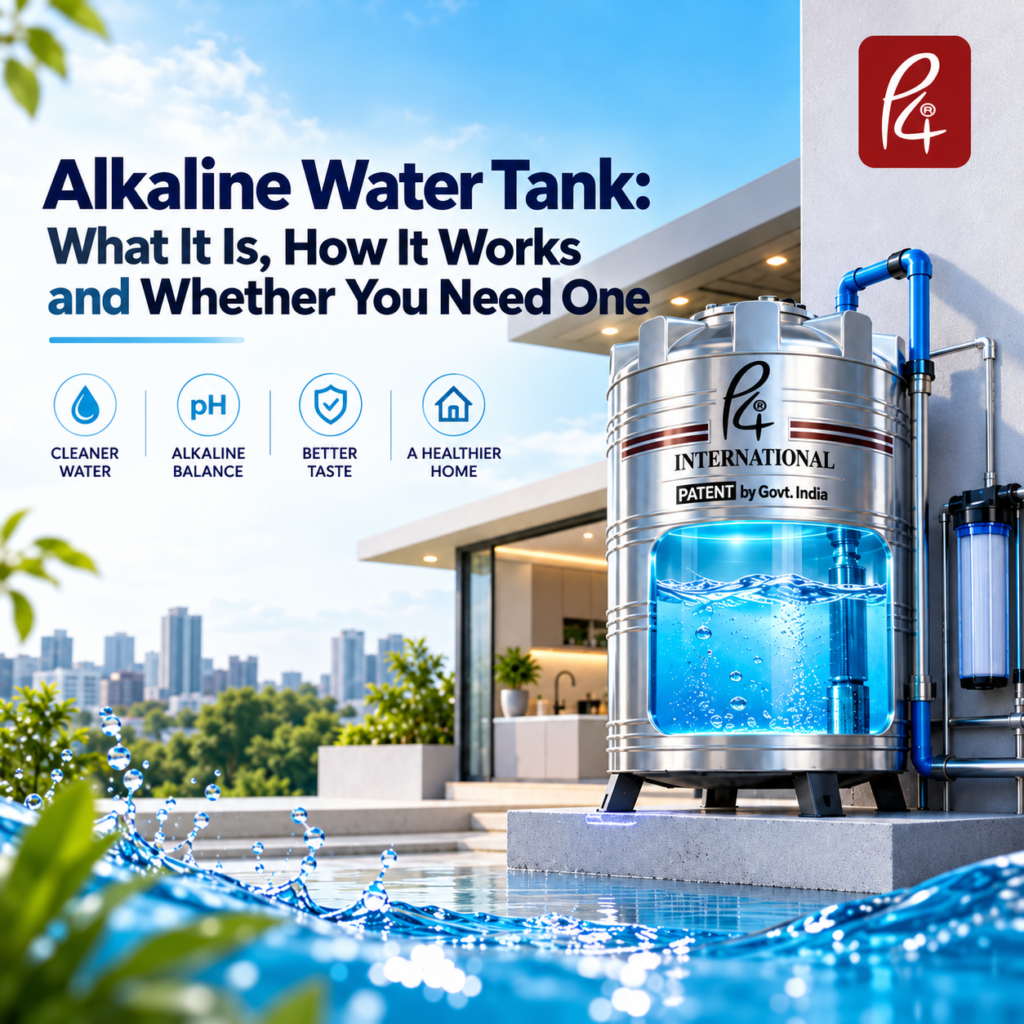
An alkaline water tank is a storage tank sold with technology meant to give stored water a pH above 7. P4 has an alkaline technology water tank, and it is known as the Silver P4 International. It comes with P4’s Silver Patented Alkaline Technology, and it suits people who like the taste of higher-pH water and want a silver antimicrobial layer in the same tank. It’s a preference, not a medical need, and this page explains why.
What Does “Alkaline” Mean?
pH is a scale from 0 to 14 that measures how acidic or alkaline a liquid is. Seven is neutral. Anything above seven is alkaline, anything below is acidic. Indian drinking-water standards (IS 10500) accept a pH between 6.5 and 8.5, and a lot of treated water already sits inside that range.
So an alkaline tank isn’t fixing a problem in most homes. It’s offering water at the higher end of an already safe range, or slightly above it, depending on the model and your source water.
What Is P4’s Alkaline Technology?
P4 has an alkaline technology water tank. It is known as the Silver P4 International, and P4 sells it under the name Silver Patented Alkaline Technology. It comes in two models.
- Base Model: 7 layers with PUF foam insulation, D²LF double lids and 30% extra storage.
- Top Model: 9+1 layers, a free external skin jacket, a free anti-scaling device, D²LF double lids and 30% extra storage.
Alongside the alkaline technology, P4 bonds silver with the polymer in nano form. Silver has antimicrobial properties, which means it can inhibit certain bacteria on the tank’s inner surface. You can read more on our silver nano technology and metal technology pages.
Does Silver Make Water Alkaline?
Not by itself. Silver is an antimicrobial agent, and alkalinity is about pH. They’re two different things. In P4’s alkaline technology water tank, the Silver P4 International, they come together in one tank, which is why it’s sold under both names. If you want to know how far a particular tank shifts pH, ask your dealer for the tested figure for that model. It depends on the model and your source water.
Is Alkaline Water Healthier?
Here’s the honest answer. Many claims about alkaline water improving health aren’t backed by strong evidence. If you like how it tastes, that’s a fine reason to buy. If you’re buying it to manage a medical condition, talk to a doctor first. No tank replaces medical advice.
Alkaline Tank vs Standard Tank
| Feature | Silver P4 International (alkaline technology) | Standard food-grade tank |
|---|---|---|
| pH technology | Yes | No |
| Silver antimicrobial layer | Yes, silver bonded in nano form | No |
| Taste | Neutral. Some people find alkaline water smoother | Neutral |
| Extra storage | 30% extra | Not usually |
| Upkeep | Clean every 6 to 12 months | Clean every 6 to 12 months |
| Certification | P4 lists IS 10146 and IS 10500 for its tanks | Ask for the certificate |
| Price | Higher | Lower |
Who Should Consider an Alkaline Tank
- People who prefer the taste of higher-pH water and want it at tank scale instead of buying alkaline bottles
- Households that also want a silver antimicrobial layer in the tank
- Homes with hard water, since the Top Model includes an anti-scaling device
- Families who store water for several days and want an insulated build (the Base Model has PUF foam insulation)
You can skip it if your water test already shows a pH between 6.5 and 8.5 and you have no taste preference. In that case a certified food-grade tank and regular cleaning do the same core job for less. See our food grade water tank guide.
Picture a family of four on treated municipal water whose lab report shows a pH of 7.4. That’s already slightly alkaline and well inside the safe range. For them, an alkaline tank adds little beyond the silver layer. Now picture a household that has tried alkaline bottled water, liked it, and wants it from every tap. That’s the buyer this tank is made for.
How to Check Your Water’s pH Before You Buy
- Fill a clean, rinsed bottle from the tap you drink from.
- Test it with a digital pH meter or test strips for a quick reading, or send it to an accredited lab (look for NABL accreditation) for a reliable one.
- Ask the lab for TDS, hardness and a bacterial count as well. They tell you more about your water than pH alone.
- Read the results against IS 10500. If your pH is already between 6.5 and 8.5, an alkaline tank won’t solve a problem.
Alkaline, Copper or Standard: How to Decide
- Silver P4 International: you want alkaline technology and a silver layer in one tank, with a neutral taste.
- Copper P4 International: you value the traditional copper-water habit and don’t mind a faint metallic note.
- 5-layer PUF foam-insulated International: you mainly want an insulated tank at a lower price.
- Standard food-grade tank: budget comes first, and certification plus regular cleaning matter most.
What It Costs
The P4 shop lists these MRP ranges. Each range spans several capacities, so compare the same capacity across lines.
- Silver P4 International, Base Model (7 layers): ₹31,500 to ₹84,000
- Silver P4 International, Top Model (9+1 layers): ₹41,250 to ₹110,000
- 5-layer PUF foam-insulated International tank, for comparison: ₹16,500 to ₹44,000
Spread the premium over the tank’s life to see what it really costs. Using made-up numbers (not P4 prices): a ₹3,000 premium over a 10-year life is ₹300 a year, or about ₹25 a month. If you also want copper instead, our copper water tank price guide shows how that line is priced.
What an Alkaline Tank Doesn’t Do
- It isn’t a purifier. It doesn’t remove heavy metals, pesticides, salts or other dissolved chemicals.
- It doesn’t replace your filter at the tap.
- It doesn’t make an uncleaned tank safe. Sediment and biofilm build up in every tank.
- It doesn’t treat health conditions.
Looking After an Alkaline Tank
Clean the tank every 6 to 12 months, keep the lids closed, and keep harsh acids and abrasive scrubbing away from the inner surface. P4 says its tanks are suitable for both outdoor and underground storage, and that they come with a manufacturer’s warranty. Ask for the term for your model in writing.
Alkaline Water Tank: FAQs
Does P4 have an alkaline technology water tank?
Yes. P4’s alkaline technology water tank is known as the Silver P4 International. It’s sold as Silver Patented Alkaline Technology in a Base Model and a Top Model.
What is an alkaline water tank?
It’s a storage tank sold with technology meant to give stored water a pH above 7. P4’s alkaline technology water tank is the Silver P4 International.
What is the difference between an alkaline tank and an alkaline water purifier?
A tank works at the storage stage for the whole household’s supply. A purifier works at the tap on the water you drink. They do different jobs, and you may still want a purifier.
Can I use an alkaline tank for all my household water?
Yes. It’s a storage tank, so it holds the water that feeds the whole house. If you only want alkaline water for drinking, you may not need one at that scale.
Is the tank safe for drinking water?
P4 says its tanks are food grade and certified to IS 10146 and IS 10500 for contact with drinking water. Ask the dealer for the certificate covering the exact model.
How much does the Silver P4 International cost?
On the P4 shop, the Base Model has an MRP range of ₹31,500 to ₹84,000 and the Top Model ₹41,250 to ₹110,000, depending on capacity. Dealers often sell below MRP, so ask for an itemised quote.
Does an alkaline tank need special cleaning?
No. Clean it on the same 6 to 12 month schedule as any tank, using a mild approach. Avoid harsh acids and abrasive scrubbing on the inner surface.
See the Silver P4 International, P4’s alkaline technology water tank, and get a quote from your nearest dealer.
September 7, 2026
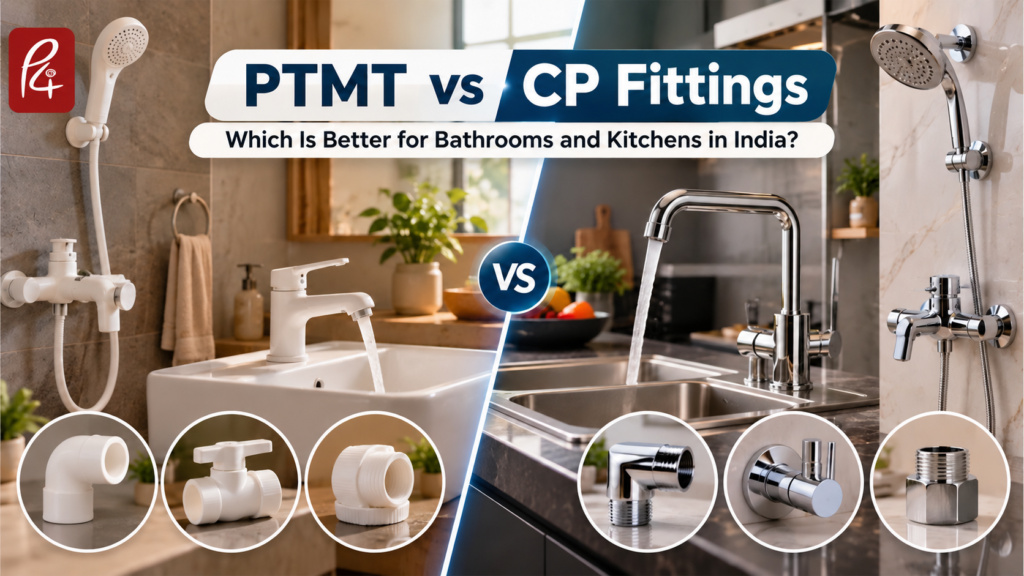
Pick PTMT for utility taps, damp bathrooms, hard-water homes and tighter budgets, because it doesn’t rust. Pick CP (chrome-plated brass) for the fittings people see and handle every day, such as basin mixers and showers, where finish and weight matter. Many homes use both.
What PTMT and CP Mean
PTMT stands for poly tetramethylene terephthalate, a tough engineering plastic that’s also sold as PBT. CP stands for chrome plated: a brass body finished with a nickel-chrome coating that gives taps their shine.
That one difference, plastic against plated metal, drives almost everything below.
PTMT vs CP Fittings Side by Side
| Factor | PTMT | CP (chrome-plated brass) |
|---|---|---|
| Rust and corrosion | Doesn’t rust or pit | Brass resists rust; thin plating can wear or flake |
| Hard water | Doesn’t corrode, though scale can still deposit | Plating can pit over time in harsh water, depending on quality |
| Strength | Tough and light; can crack if over-tightened or hit hard | Heavier and stronger under force |
| Look and feel | Plastic finish, fewer premium looks | Bright metallic finish, solid weight |
| Hot water | Check the maker’s temperature rating | Commonly used on hot lines |
| Price | Lower | Higher |
| Best for | Bib cocks, angle cocks, health faucets, utility use | Basin and shower mixers, visible fittings |
Brass taps were the default for decades. PTMT fittings became common in Indian homes as a lighter, rust-free alternative at a lower price, and most brands now sell both.
Where PTMT Makes Sense
Bathrooms in humid cities like Kolkata are hard on metal. Steam, damp air and soapy splashes sit on fittings all day. PTMT doesn’t care about moisture, so it suits the taps you rarely look at but use constantly: the P4 PTMT bib cock, angle cocks and health faucets.
Rented homes and secondary bathrooms are another good fit. You get a tap that lasts without paying for a finish nobody will inspect. Browse the P4 unbreakable PTMT range to see the options.
Where CP Makes Sense
A basin mixer or shower is part of the room’s look. CP gives the bright finish and heavier feel people expect in those spots, and brass is a standard choice for hot-water lines.
The catch is plating quality. Thin plating can bubble or pit within a couple of years. Look closely at the finish, ask what the warranty covers and buy from a maker that stands behind the plating. See the P4 CP fittings range.
The Tap Names, Explained
- Pillar cock: a tap that stands on a basin or kitchen platform, with the water entering from below. Try the P4 PTMT pillar cock.
- Bib cock: a wall-mounted tap with a bent nose, common in bathrooms for filling buckets.
- Angle cock: a small valve fitted at a right angle on the supply line, used to isolate a basin, cistern or geyser.
- Health faucet: a handheld spray for hygiene, normally fitted beside the toilet.
- Stop cock: a valve that shuts off a section of pipework. P4 sells a concealed stop cock for in-wall fitting.
Which Material Where: Room by Room
| Fitting | Suggested material | Why |
|---|---|---|
| Wash basin mixer | CP | Visible, and carries hot and cold supply |
| Shower and wall mixer | CP | Handled daily, sits on the hot line |
| Bib cock | PTMT | Always wet, and rarely looked at |
| Health faucet | PTMT | Constant moisture and splashes |
| Angle cocks | PTMT | Hidden, and damp all the time |
| Kitchen sink cock | Either | CP for a matching look, PTMT for budget and hard water |
| Washing-machine and balcony taps | PTMT | Damp or outdoor, and no finish needed |
Treat this table as a starting point. Check the rated temperature and pressure in the product’s specifications before you fit any tap on a hot line.
A Practical Mix for One Bathroom
For a typical bathroom, use CP for the wall mixer and shower. Those are the visible fittings, and they sit on the hot line. Use PTMT for the bib cock, health faucet and angle cocks, where you want long life at a lower cost.
You get the finish where it shows and the corrosion resistance where moisture does the damage. It’s also easier on the budget than going all brass.
Hard Water and Your Taps
Hard water leaves white scale around spouts, aerators and handles, and it happens on both materials. On CP, scale combined with abrasive scrubbing wears the plating. On PTMT, harsh cleaners can dull the surface. Wipe both with a soft cloth and a mild cleaner, and unscrew the aerator now and then to clear the build-up.
Looking After Each Type
- CP: wipe dry after use, and skip bleach and scouring powder.
- PTMT: wash with mild soap and water, and don’t over-tighten when fitting.
- Both: replace a worn washer or cartridge as soon as a drip starts.
- Both: keep acidic descalers off the surface, or rinse them off quickly.
Signs a Fitting Is Poor Quality
- Visible pits, bubbles or an uneven shine on the finish
- Rough moulding seams or leftover flash on plastic parts
- A handle that wobbles, or a spindle that feels gritty
- No brand name, batch detail or marking on the body
How to Think About Cost
A cheap tap that fails in two years costs more than a mid-priced one that lasts ten. Add the plumber’s visit and the wall you may have to open, and replacement gets expensive fast. Spend where failure hurts most (concealed parts and hot lines) and save where it doesn’t (utility taps).
Renovating a Bathroom: Where to Start
Start with the pieces behind the wall, because they’re the hardest to change later. Choose the concealed stop cock and the angle cocks first. Then pick the visible fittings (mixer, shower, basin tap) to match your tiles and sanitaryware. Leave the utility taps for last, since they’re cheap to swap and don’t affect the look.
What to Check Before You Buy
- Standards marking. Look for the ISI mark where it applies, and ask the dealer which standard covers the exact model.
- Cartridge. Ceramic disc cartridges generally outlast rubber washers.
- Weight and finish. Pick the tap up. A CP tap that feels hollow-light deserves questions, and so does any finish with visible pits or uneven shine.
- Warranty. Ask what it covers, and whether it covers the finish.
PTMT vs CP Fittings: FAQs
Which is better for hard water?
PTMT doesn’t corrode, so it holds up well against mineral-rich water, though scale still collects on its surface. Well-plated CP also copes if you clean it regularly.
Should I use PTMT in the kitchen?
For the sink cock, either works. Choose PTMT for budget and hard water, or CP for a matching look with other fittings.
What is the full form of PTMT?
Poly tetramethylene terephthalate, an engineering plastic also known as PBT.
Is PTMT better than brass?
Neither wins everywhere. PTMT wins on rust resistance and cost. Brass wins on strength and finish.
Do PTMT taps break easily?
Good-quality PTMT is tough. Taps usually crack when they’re over-tightened or hit hard, so tighten to the manufacturer’s guidance.
Can PTMT fittings be used for hot water?
Check the maker’s rated temperature on the product or in its specifications before using it on a hot line.
Can I mix PTMT and CP in the same bathroom?
Yes. Mixing is common, and the two work together without any problem. Only the finish differs, so keep colours consistent where fittings sit side by side.
When should a tap be replaced?
There’s no fixed interval. Replace a tap when it leaks even after a new washer or cartridge, or when the finish has started to fail.
Does P4 make both PTMT and CP fittings?
Yes. P4’s shop lists both an Unbreakable PTMT range and a CP Fittings range. See the P4 unbreakable PTMT range and the P4 CP fittings range, or explore the Almino range.
Choose your fittings from the P4 PTMT and CP ranges, and find a dealer near you.

August 31, 2026
Introduction
A dripping tap or a slightly loose pipe joint rarely feels urgent — easy to postpone, easy to forget, until a ceiling stains or a water bill doesn’t make sense.
The damage from a leak is almost never proportional to its size. A worn-out washer or a corroded valve — among the smallest, least expensive parts in any home — can, left unaddressed, trigger repair bills running into lakhs once water reaches flooring, structural concrete, or electrical wiring. This guide from P4 India covers where household leaks start, what they cost when ignored, and why the cheapest insurance in plumbing is a fitting most people never think about until it fails.
Why Small Leaks Turn Into Big Problems
Water doesn’t stay where it starts. A leak at a joint or valve travels along the path of least resistance: down a wall cavity, along a floor slab, or through a construction joint into the flat below. By the time a stain appears, water has often been seeping unseen for weeks or months.
This is why real damage is rarely limited to the fitting itself. The cost multiplies as water spreads into materials that are expensive to fix: plaster, paint, flooring adhesive, electrical conduit, and in the worst cases, structural reinforcement.
The Most Common Points of Failure
Almost every household leak traces back to one of a handful of predictable failure points — which is also why almost every leak is preventable.
Washers and gaskets. The seals inside taps and valves degrade with age, heat, and constant water contact. A worn washer is one of the smallest, simplest fittings in the house, yet responsible for a disproportionate share of leaks.
Pipe joints and unions. Threaded joints, especially where dissimilar materials meet (copper to PVC, or old galvanised iron to newer fittings), are common leak points as sealant degrades or thermal expansion loosens the connection. Quality Pipes and correctly matched joint fittings reduce this risk.
Inlet and outlet valves. Cistern fill valves, angle cocks, and stop valves see constant use and mineral exposure, making them a frequent — and frequently ignored — source of slow leaks (see our piece on hard water damage for how scaling accelerates this).
Flexible connector hoses. The braided hoses connecting taps, geysers, and washing machines to the supply have a limited lifespan and are a common source of sudden, high-volume leaks.
Overflow pipes and tank fittings. A poorly sealed outlet on your water storage tank can leak continuously without being noticed, since the water often runs somewhere already expected to be wet, like a drain or external wall.
What a “Small” Leak Actually Costs Over Time
The maths on a slow leak is worse than most people assume. A dripping tap losing roughly one drop per second wastes over 11,000 litres of water a year — before any structural damage is even considered.
| Leak Scenario | Fix Required | Downstream Impact If Ignored |
| Worn tap washer | Simple washer swap, minutes of labour | Wasted water, eventual full valve replacement |
| Corroded angle cock | Straightforward valve replacement | Wall dampness, plaster damage, repeated repainting |
| Failed flexible hose | Quick hose replacement | Sudden flooding, damaged flooring or furniture |
| Leaking pipe joint in wall | Localised repair, minor wall opening | Structural dampness, mould, extensive re-plastering |
| Undetected slab leak | Professional leak detection | Flooring removal, slab repair, damage to a neighbour’s unit |
The pattern is consistent across every scenario: fixing the fitting early is quick and routine. The damage from ignoring it is not.
The Hidden Costs Beyond Repair Bills
Structural damage. Prolonged moisture weakens plaster, corrodes reinforcement steel, and can compromise structural integrity in severe cases.
Mould and health impact. Persistent dampness encourages mould, linked to respiratory irritation — relevant for households with children, elderly members, or anyone with asthma.
Damage to neighbours’ property. In apartments, an undetected leak often affects the flat below before it’s noticed in the source flat — turning maintenance into a legal and financial dispute.
Increased water bills. Even leaks too small to notice visually add up meaningfully over months.
Electrical hazards. Water reaching conduits or wiring embedded in walls creates a genuine safety risk, not just a repair inconvenience.
Warning Signs You Have an Active Leak
- A water bill that’s noticeably higher with no change in usage
- Damp patches, discolouration, or peeling paint on walls or ceilings
- A musty smell with no obvious moisture source
- The sound of running water when all taps are closed
- A water meter that keeps moving with no water in use anywhere in the house
- Unexplained mould growth near bathrooms, kitchens, or exterior walls
A simple check: turn off every tap and appliance, note your water meter reading, wait 30 minutes, then check again. Any movement indicates an active leak somewhere in the system.
Why Fitting Quality Is the Cheapest Insurance You Can Buy
Given how disproportionate the downstream cost is compared to the fitting that caused it, the case for
better-quality fittings is straightforward — exactly the gap P4 India’s CP Fittings, PTMT fittings, and Spare Parts ranges are built to close:
Better washers and cartridges last longer under pressure and heat cycling, reducing the single most common leak source in any home.
Corrosion-resistant valve bodies hold up better against hard water and mineral exposure than budget alternatives, reducing the angle cock and stop valve failures behind many slow, wall-hidden leaks.
Properly sealed CP fittings resist the internal scaling and seal degradation that eventually cause drips. P4 India’s unbreakable PTMT range is built specifically for India’s hard water and daily-use conditions.
Quality flexible connector hoses, rated for consistent pressure and periodically inspected, sharply reduce the risk of sudden, high-volume failures.
The price difference between a budget fitting and a quality, IS 12701 certified fitting is modest. Over 10–15 years, that difference is often the gap between routine maintenance and a major, disruptive repair.
A Practical Leak-Prevention Checklist
- Inspect visible fittings every few months — tap bases, valve connections, and flexible hoses under sinks and appliances
- Replace washers and cartridges proactively, rather than waiting for a visible drip
- Check your water meter periodically for movement during a no-usage window
- Address hard water buildup on valves and fittings before it accelerates seal degradation
- Upgrade ageing flexible hoses every 5–7 years, even without visible wear
- Don’t ignore a “minor” drip — treat it as an early warning, not a cosmetic annoyance
Frequently Asked Questions
How much water does a dripping tap actually waste?
A tap dripping roughly once per second wastes over 11,000 litres a year — enough to fill several household tanks, in water that’s simply paid for and lost.
How can I tell if a leak is happening inside a wall or under the floor?
Warning signs include damp patches, a musty smell with no obvious source, and a water meter that keeps moving when no taps are in use. A professional leak detection service can pinpoint the location without extensive demolition.
Is it worth replacing fittings before they actually fail?
For fittings older than 8–10 years, or any showing stiffness, staining, or reduced flow, proactive replacement with quality CP or PTMT fittings is almost always cheaper than the damage from a sudden failure.
Does homeowner’s insurance typically cover water damage from a leak?
Coverage varies by policy in India, and many policies distinguish between sudden accidental damage and damage from a leak left unaddressed over time. Check your specific policy terms.
What’s the single most important fitting to check regularly?
Flexible connector hoses to geysers and washing machines deserve particular attention, since their failure tends to be sudden and high-volume rather than gradual.
Are P4 India’s fittings and spare parts suitable for hard water areas?
Yes — P4 India’s CP Fittings and PTMT range use corrosion-resistant, scale-resistant materials suited to India’s widespread hard water conditions, reducing the valve and cartridge failures that cause many household leaks.
Don’t Wait for the Ceiling Stain
The gap between a small worn-out fitting and a major repair bill isn’t really about bad luck — it’s almost always a small warning sign left unaddressed for months or years. Regular inspection and quality fittings are the cheapest protection available for any Indian home.
Explore P4 India’s CP Fittings, PTMT fittings, Pipes, and Spare Parts range — built to reduce the leaks that cause the real damage.
August 31, 2026
Introduction
RO purifiers have become the default answer to India’s inconsistent water quality — and for good reason, since reverse osmosis is genuinely effective at removing dissolved contaminants, heavy metals, and excess salts. But that same filtration process has a side effect most households never think about: it strips out the natural minerals in water along with the contaminants, leaving behind water that’s clean but nutritionally empty and often mildly acidic.
A water recharger is designed to solve exactly this problem. This guide from P4 India explains what happens to water during RO purification, what a water recharger actually does, and how a non-electric, mineral-enriching device like the P4 Zero C fits into a household’s existing RO setup — and why so many households run an RO system for years without realising this gap exists.
What RO Filtration Actually Removes From Your Water
Reverse osmosis works by forcing water through a semi-permeable membrane fine enough to block dissolved salts, heavy metals, bacteria, and most other contaminants. It’s a genuinely effective purification method — but the membrane doesn’t distinguish between harmful contaminants and beneficial dissolved minerals, since both pass through the same physical filtration barrier.
As a result, RO-purified water typically comes out significantly demineralized — calcium, magnesium, zinc, and other trace minerals that were naturally present in the source water are removed along with everything else.
Independent lab comparisons of demineralized versus mineral-enriched water show the difference clearly: demineralized water can show calcium levels below 0.5 mg/L and zinc below 0.0005 mg/L, compared to mineral-enriched water showing calcium around 6.4 mg/L and zinc around 1.13 mg/L in the same testing.
This demineralization is also part of why RO water often tastes noticeably “flat” or “empty” compared to natural spring or mineral water — much of what gives water its taste and body is exactly the mineral content RO removes in the purification process.
What Is a Water Recharger?
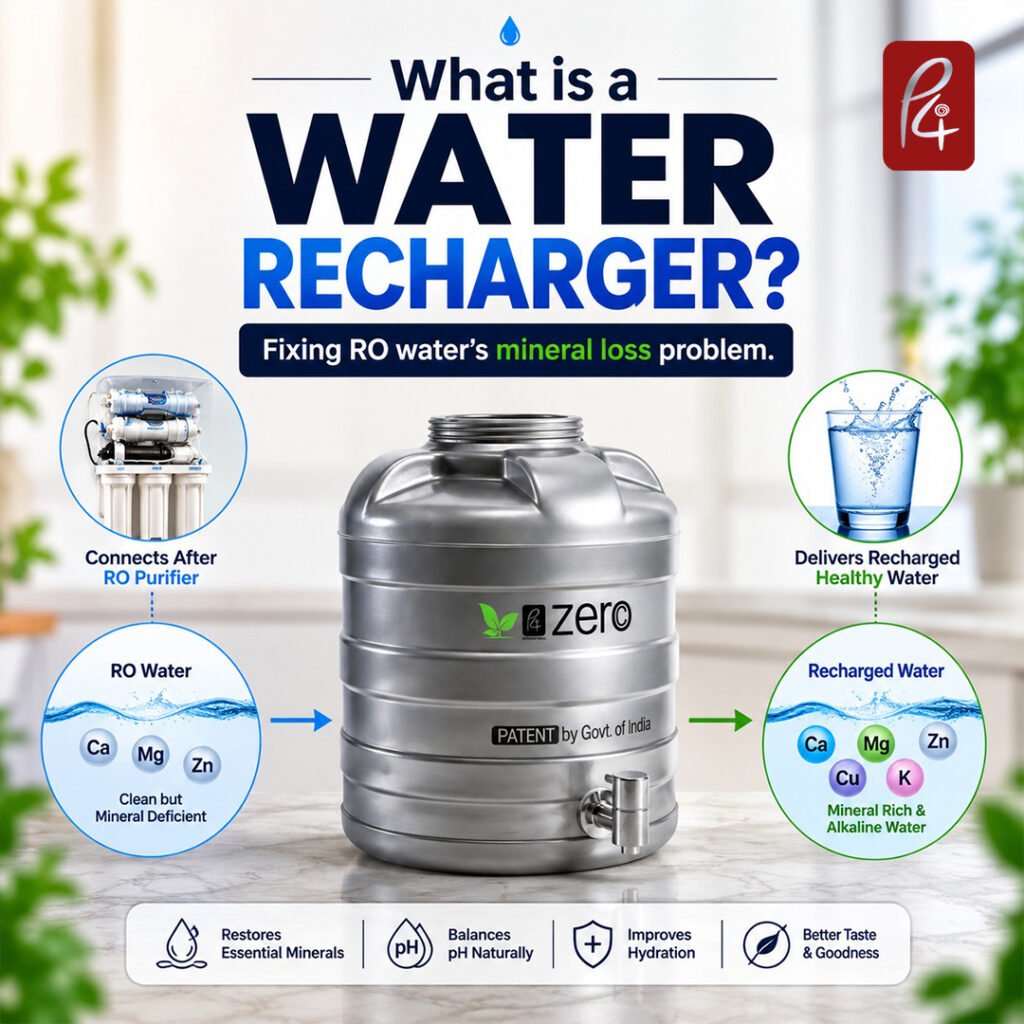
A water recharger is a container or in-line device that RO-purified water passes through (or is stored in) after filtration, designed to add essential minerals back into the water and typically raise its pH toward an alkaline range. Unlike RO systems, which rely on pressure and electricity to force water through a membrane, most water rechargers — including P4 India’s — work entirely without electricity, using mineral-infused internal components that interact with the water as it sits or flows through.
The core idea is straightforward: RO filtration removes minerals as a side effect of removing contaminants, and a water recharger restores some of that lost mineral content afterward, rather than trying to prevent the loss during filtration itself.
How the P4 Zero C Water Recharger Works
P4 India’s Zero-C Alkaline Recharger is built specifically to sit downstream of an RO system and address this demineralization gap. Its key design elements:
- Single-piece, seamless roto-moulded construction — no joints or seams where bacteria can accumulate, addressing a hygiene weak point common in multi-part containers
- Alkaline technology, patented by the Government of India — designed to raise the pH of RO-purified water naturally
- Mineral enrichment — restores calcium, magnesium, zinc, and copper to purified water, based on P4’s own lab comparison data showing meaningfully higher mineral levels after treatment
- Zero electricity required — works passively, with no power connection, unlike electric water ionisers that perform a similar alkalizing function
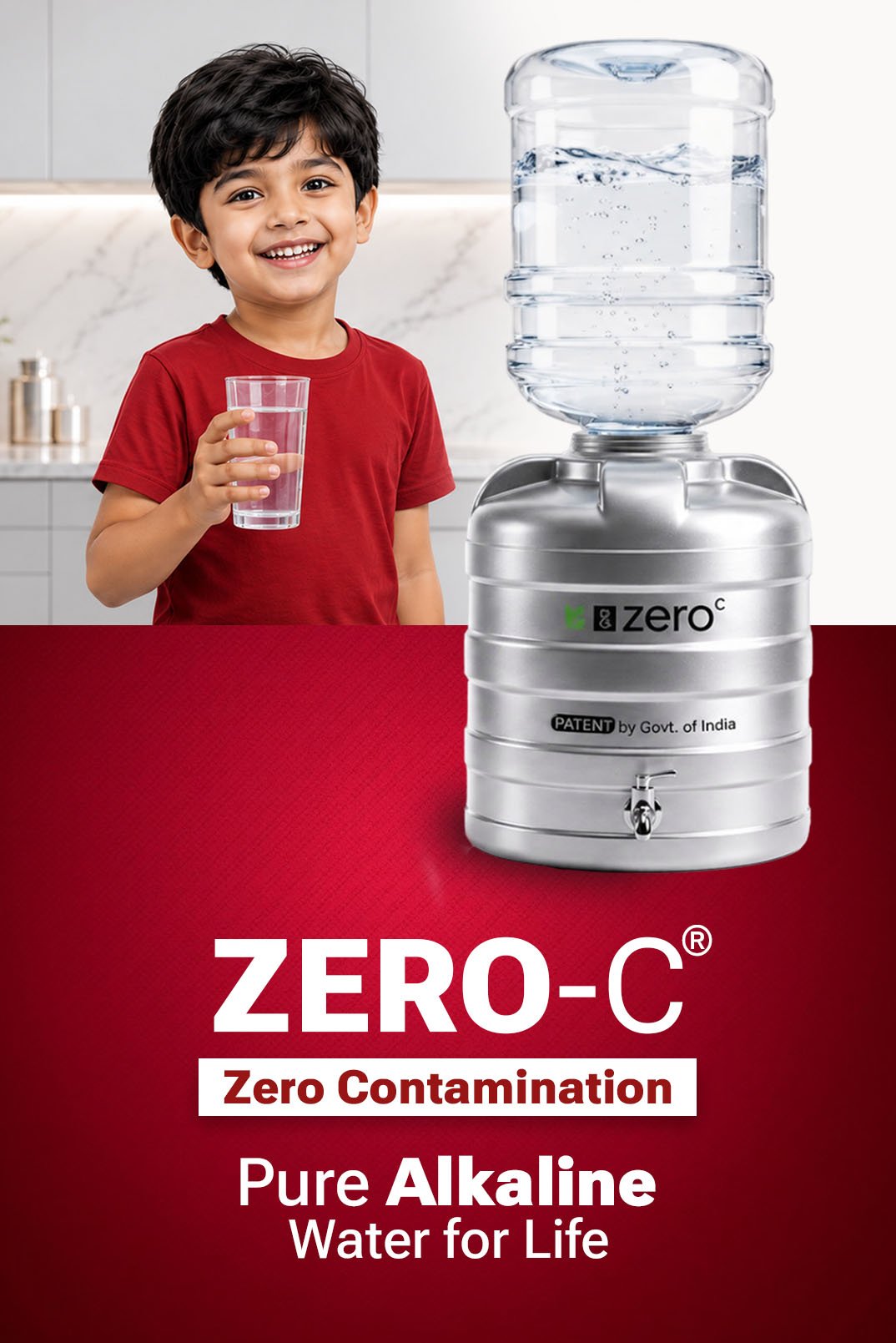
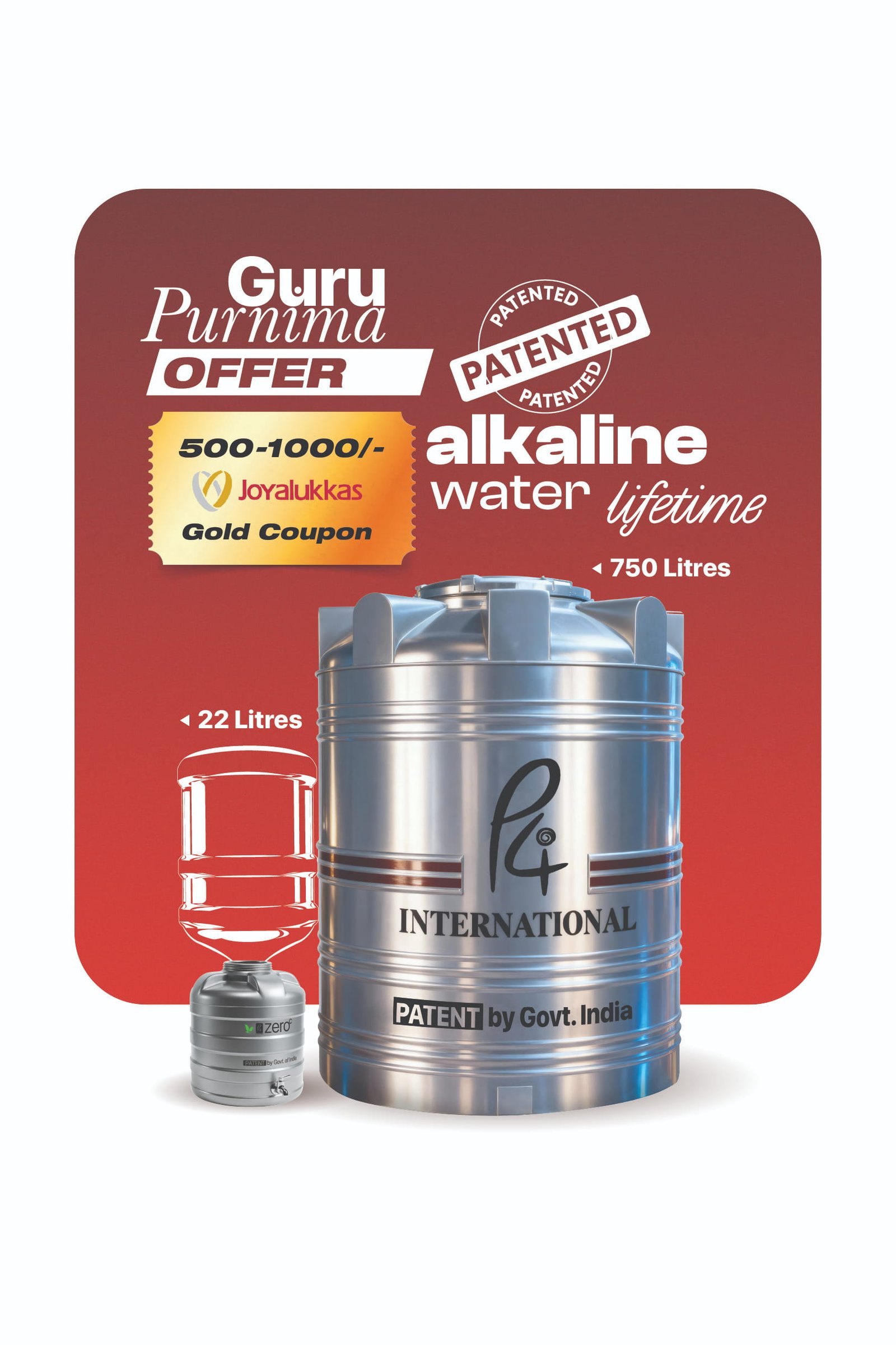
- 20L + 2L extra storage capacity — a 22-litre total capacity designed for household drinking water needs
- 99.9% germ-free design — supported by the seamless, joint-free construction that limits places for bacterial growth to take hold
This positions the Zero-C as a companion device to an existing RO system rather than a replacement for one
— it doesn’t purify water itself, it restores what purification removes.
Why Demineralized Water Matters for Everyday Health
It’s worth being precise about what mineral loss in drinking water actually means, since the topic gets both understated and overstated across the industry.
What’s well established: Long-term consumption of water with very low mineral content is associated with concerns in nutritional and public health literature, partly because water is one of several dietary sources of calcium, magnesium, and other trace minerals, and partly because demineralized water can be mildly acidic, which some people find affects taste and digestive comfort.
What’s more product-specific: P4 India’s own testing associates its alkaline recharger technology with benefits including antioxidant properties, pH enhancement, and mineral content aligned with IS-10500 (India’s drinking water quality standard). Broader claims sometimes associated with alkaline water — such as
anti-ageing or antiviral effects — are part of ongoing wellness discussion in this space rather than settled clinical consensus, so it’s worth treating those specific claims as the manufacturer’s positioning rather than
independently established medical fact.
The more grounded, verifiable point is simpler: RO water is measurably lower in essential minerals than source water, and a water recharger measurably restores some of that mineral content — which is a meaningful, practical benefit regardless of how the broader wellness claims are framed.
Water Recharger vs Electric Water Ionizer: What’s the Difference?
Households evaluating how to re-mineralize or alkalize RO water often come across electric ionizers as an alternative. The core differences:
| Factor | Water Recharger (Non-Electric) | Electric Water Ionizer |
| Power requirement | None | Requires continuous electricity |
| Installation complexity | Simple, passive setup | More complex, often plumbed in |
| Ongoing running cost | None | Electricity cost over time |
| Maintenance | Minimal, no electrical components to service | Electrodes and filters need periodic servicing |
| Mechanism | Mineral-infused container technology | Electrolysis to separate alkaline/acidic water streams |
| Best suited for | Households wanting a simple, low-maintenance water recharger | Households wanting customizable pH/alkaline levels and willing to invest in upfront cost and upkeep |
For most households already running an RO system, a non-electric water recharger like the Zero-C offers a simpler, lower-maintenance way to address the same demineralization problem an ionizer targets, without adding another electrical appliance or ongoing running cost to the kitchen.
Who Should Consider Adding a Water Recharger?
- Any household using an RO purifier as their primary water source, since demineralization is a near-universal side effect of RO filtration, regardless of the specific RO brand or system in use
- Households where RO water tastes noticeably flat compared to bottled mineral water or natural source water
- Families looking for alkaline water benefits without the electricity and maintenance requirements of an ionizer
- Anyone prioritising hygienic, low-maintenance storage for purified drinking water, given the seamless, joint-free construction that limits bacterial buildup compared to standard containers
- Households evaluating whether to add an expensive electric ionizer, since a non-electric recharger addresses much of the same mineral and pH gap at a fraction of the ongoing running cost
Common Misconceptions About Water Rechargers
“A water recharger purifies water.” It doesn’t — a water recharger works on already-purified water to restore minerals and adjust pH. It’s a complementary device to an RO system, not a substitute for one.
“More alkaline is always better.” Water pH matters, but extreme claims about alkaline water curing specific diseases go well beyond what’s established — treat alkaline technology as a genuine mineral and pH improvement, not a medical treatment.
“All water rechargers work the same way.” Build quality varies significantly — a seamless, single-piece construction like P4’s Zero-C avoids the joint-related bacterial growth risk that cheaper, multi-part containers
can introduce, which matters just as much for hygiene as any mineral-related design.
Frequently Asked Questions
Does a water recharger replace my RO purifier?
No. A water recharger works on water that’s already been purified by RO filtration — it doesn’t remove contaminants itself. It’s designed to sit after your RO system, restoring minerals that filtration removed.
How does a non-electric water recharger add minerals without any power?
Devices like P4 India’s Zero-C use mineral-infused internal materials that interact with water as it passes through or sits in the container, releasing trace minerals like calcium, magnesium, zinc, and copper without requiring electricity or moving parts.
Is RO water actually harmful without a recharger?
RO water is safe to drink, but its low mineral content and mildly acidic pH are genuine, measurable characteristics that some households choose to address, particularly for daily drinking water over the long term.
What’s the difference between P4’s Water Recharger and its Silver P4 International tank?
Both use alkaline technology, but they serve different roles — the Water Recharger (Zero-C) is a compact, 22-litre device designed to sit downstream of an RO system for daily drinking water, while Silver P4 International is a full-capacity household storage tank with its own alkaline and antimicrobial features built in.
Does the P4 Zero C need any maintenance?
Its single-piece, seamless construction and lack of electrical components mean minimal maintenance compared to an ionizer, though periodic cleaning is still recommended for any container used for daily drinking water.
Make Your Own Mineral Water at Home
RO purification solves one problem — contamination — while quietly creating another: mineral-depleted, often flat-tasting water. A water recharger closes that gap, restoring essential minerals and improving pH without adding electricity, complexity, or ongoing running costs to your kitchen.
Explore P4 India’s Water Recharger range, including the P4 Zero C Alkaline Recharger, to complete your RO water setup.
[CTA ® Water Recharger Product Range]
What People Say About Us

Samanta Builders
P4 International के साथ मेरा 15 सालों का जुड़ाव विश्वास, गुणवत्ता और निरंतर सहयोग की एक मिसाल है। एक वितरक के रूप में मैंने देखा है कि उनके प्रोडक्ट्स — खासकर वाटर टैंक — ग्राहकों में भरोसे के साथ अपनाए जाते हैं। कंपनी की टीम का व्यवहारिक और समय पर समर्थन हमेशा मेरे व्यापार को मजबूत बनाने में मदद करता है। इस लम्बी यात्रा का हिस्सा बनना मेरे लिए गर्व की बात है।

Aviit Sarkar
Working at P4 International has been a game-changer for me. The trust customers place in our products—especially our innovative water tanks and purifiers—makes selling a rewarding experience. The quality speaks for itself, and that makes my job easier and more fulfilling every day.

Noren Dolui
Working with P4 International Water tanks, Pipes and other bathroom fittings items for 7 yaers. Quality is Top Notch. For Plumber they have exciting schemes.

Moidul Mondal
খুবিই ভাল কোয়ালিটি্র ট্যাঙ্ক, নতুন ধরনের ট্যাঙ্ক যা এর আগে আমি দেখিনি, P4 এর ট্যাঙ্ক আমি গ্রাহক দের কাছে দিয়েছি এবং তারা এখনো আমার নাম করে।

Soumen Agarwal
গত ৫ বছর ধরে P4 International-এর সঙ্গে যুক্ত থেকে আমি দারুণ অভিজ্ঞতা অর্জন করেছি। একজন ডিস্ট্রিবিউটর হিসেবে আমি দেখেছি, তাদের প্রোডাক্ট যেমন উন্নত মানের, তেমনি গ্রাহকদের মধ্যে আস্থাও তৈরি করে। বিশেষ করে তাদের আধুনিক ওয়াটার ট্যাঙ্কগুলো নিজেই বিক্রি হয়ে যায়। কোম্পানির সাপোর্ট টিম সবসময়ই সহায়ক ও পেশাদার। একসাথে এগিয়ে চলার এই সফরটা সত্যিই প্রশংসনীয়।
Frequently Asked Questions (FAQ)
P4 International is a leader in premium water storage solutions, offering advanced Copper, Silver, and Alkaline technology tanks. Trusted for their durability, safety, and health benefits, our tanks provide clean and pure water, making us the top choice for quality water tanks.
The size of a 5000-litre water tank can vary depending on the design and material used. For P4 Tanks, a typical 5000-litre tank generally has the following approximate dimensions:
Height (for vertical tanks): 2.5 to 3 meters
Diameter (for vertical tanks): 1.5 to 2 meters
Length (for horizontal tanks): 3.5 to 4 meters
The price of the 2000-litre water tank depends on the model and features you choose, such as material type (Copper, Silver, or Food-grade plastic) and any ongoing offers or promotions. To get the most accurate and up-to-date pricing, please visit our product page on P4 India or contact our sales team for personalized assistance.
A 1000-litre P4 water tank is typically sufficient for a family of 4-5 members, covering daily needs like drinking, cooking, and bathing. For larger families or areas with water supply interruptions, a bigger tank may be more suitable. Visit P4 India for more details on tank capacities.
Stay Connected With Us
Get inspired, receive support, and stay updated with the latest insights, tips, and innovations.
Transform Your Growth
We have more than 300+ distributors all across the country