
Introduction
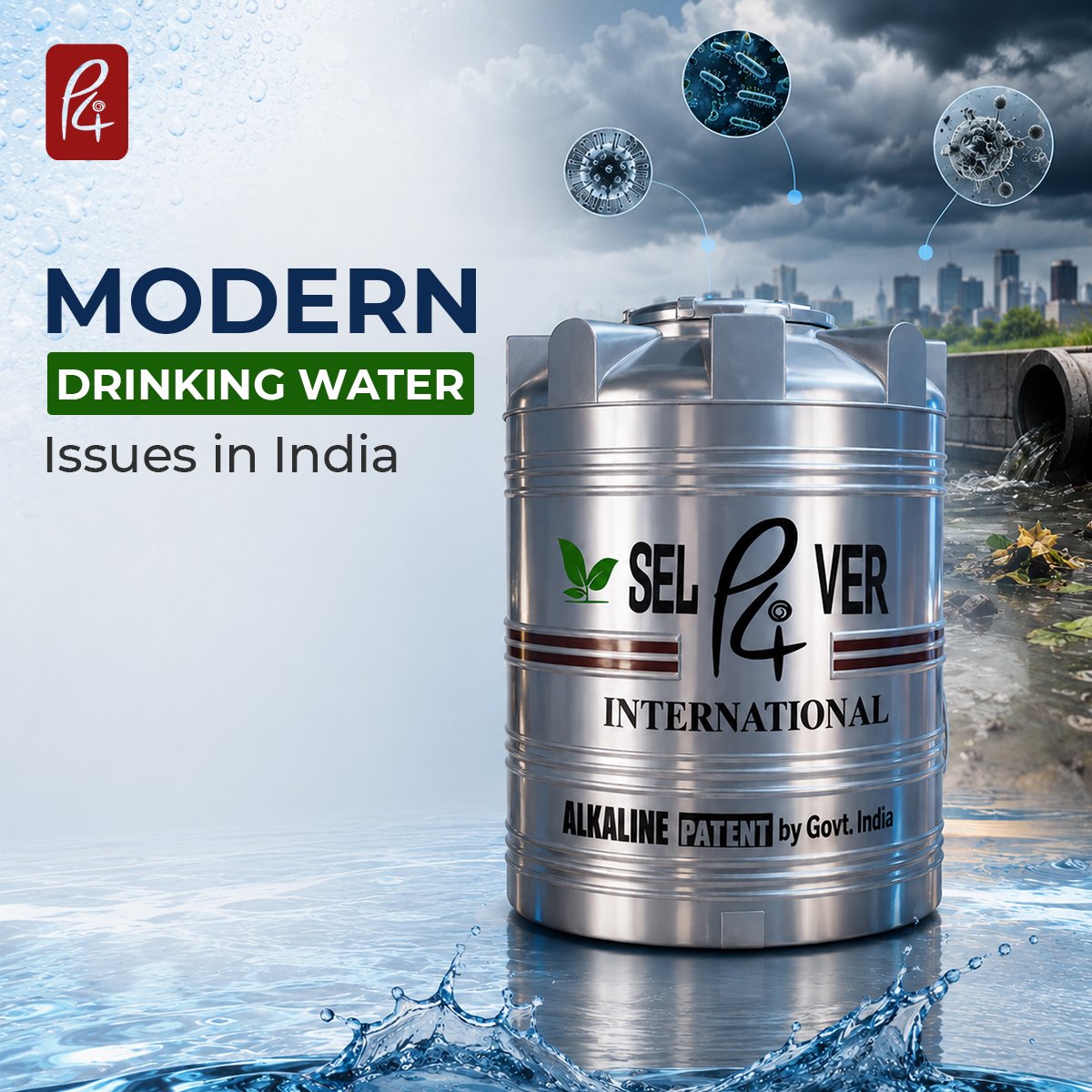
For decades, India’s drinking water conversation centred on a familiar set of problems: bacterial contamination, fluoride and arsenic in groundwater, and inadequate treatment infrastructure. Those issues haven’t disappeared — but a newer, less-discussed layer of risk has emerged alongside them, sitting quietly on rooftops across the country: the storage tank itself.
Understanding what’s changed — and what’s actually in the water by the time it reaches your glass — is the first step to fixing it.
The Water Crisis Has Changed Shape
India’s drinking water challenge used to be almost entirely about access — getting clean water to people at all. That problem still exists in many regions, but for a growing number of urban and semi-urban households, the challenge has shifted to quality after storage, not just quality at the source.
Municipal or borewell water can leave the treatment point reasonably clean and still degrade significantly by the time it’s drawn from a household tap — because of what happens to it during storage. This is the modern drinking water problem hiding in plain sight: the water itself may be fine, but the container holding it is quietly working against it.
Groundwater Depletion and Its Knock-On Effects
India’s groundwater tables have dropped sharply in many regions due to over-extraction, driving more households toward irregular municipal supply, tanker water, or borewells drawing from increasingly stressed aquifers. This has two direct effects on household storage:
- Households store more water for longer periods, as a buffer against unreliable supply — increasing the time water spends in a tank before use, and therefore the time available for contamination to develop.
- Water quality from stressed sources can be less consistent, with more variable mineral content and, in some regions, elevated contamination risk requiring careful storage practices to avoid compounding the problem.
The practical result: the tank isn’t just a convenience anymore — it’s doing more work, for longer, than it was originally designed for in many households.
Microplastics: The Contamination Nobody Talks About
Alongside traditional contamination concerns, a newer area of research has emerged around microplastics in drinking water — tiny plastic particles shed from degrading plastic surfaces, including water storage containers. Evidence in this field is still developing, but the direction is consistent: ageing or low-grade plastic tanks are a measurable, everyday contact point for microplastic exposure in households that store water this way.
This isn’t a reason for alarm, but it is a reason to treat tank material quality as a genuine health-related decision — not purely a plumbing or budget one.
Why Your Tank Matters as Much as Your Filter
Most households investing in water safety focus entirely on filtration — RO systems, UV purifiers, gravity filters. These are valuable, but they solve for a specific stage: treating water at the point of use. They don’t address what happens to water between the source and that final filtration step.
A degraded, poorly sealed, or low-grade tank can reintroduce contamination — sediment, algae, bacteria, chemical leaching — after water has already been treated once, or before it even reaches your filter. In effect, an excellent filter paired with a poor-quality tank is treating a problem the tank keeps recreating.
Real household water safety requires attention at both ends: source treatment and storage quality.
What’s Actually Happening Inside a Degrading Tank
A tank doesn’t need to look obviously dirty to be compromising water quality. Common, easy-to-miss issues include:
- UV degradation causing micro-cracking in cheaper plastic, letting in contaminants and creating entry points for bacteria
- Algae growth on inner walls when a tank lacks proper light-blocking construction — thriving especially in India’s warm climate
- Sediment accumulation at the tank base, often invisible from the water drawn near the top
- Chemical leaching from lower-grade or recycled polymer, accelerated by heat exposure on rooftop installations
- Poor sealing around lids and overflow pipes, allowing dust, insects, and rainwater runoff to enter
Each of these develops gradually — which is exactly why so many households don’t notice until there’s a visible symptom: odour, discolouration, or a spike in stomach-related illness.
Urban India’s Water Crisis: How Storage Habits Play a Role
Urban water stress has pushed households toward habits that, while understandable, can unintentionally increase risk:
- Longer storage durations, as households buffer against supply interruptions, giving contamination more time to develop
- Delayed tank cleaning schedules, often driven by inconvenience of rooftop access rather than a real assessment of risk
- Mixing old and new water when tanks are topped up before being fully emptied, allowing older, more contaminated water to persist longer than intended
- Reliance on tanker water in areas with acute shortages, which can carry more variable quality and higher contamination risk if stored in an already compromised tank
None of these are habits people choose carelessly — they’re responses to genuine supply pressure. But they do mean the storage tank itself needs to be more resilient than it did a generation ago, when supply was more consistent and storage periods were shorter.
Copper, Alkaline, and Food Grade Storage: A Modern Response
The renewed interest in copper, alkaline, and food-grade storage tanks isn’t a coincidence — it’s a direct response to this shifted risk landscape. Each addresses a specific gap:
- Food-grade construction minimises chemical leaching and reduces microplastic shedding risk, using virgin, food-contact-approved polymer rather than blended or recycled material.
- Copper-infused storage draws on traditional antimicrobial benefits, adding a passive layer of protection relevant to households storing water for longer periods.
- Alkaline treatment in some storage systems helps address water pH, relevant for households drawing from more variable or stressed water sources.
These aren’t marketing upgrades layered onto an old product category — they’re responses to how India’s actual water landscape has changed.
What You Can Do Right Now
1. Check your tank’s material grade. Ask specifically whether it’s food grade, IS 12701 certified, and made from virgin (not recycled) polymer.
2. Reduce unnecessary storage duration where possible. If supply allows, avoid letting water sit in the tank far longer than needed.
3. Clean on a realistic schedule — at minimum before summer and at the start of monsoon, more often if your household relies on long storage periods.
4. Pair storage quality with filtration, rather than relying on either alone. They solve different parts of the same problem.
5. Watch for early signs — odour, taste changes, or unexplained digestive issues in the household — and investigate the tank, not just the source.
Frequently Asked Questions
Is India’s drinking water actually getting worse, or just differently risky? Both traditional contamination concerns and newer issues — like storage-related chemical leaching and microplastics — now coexist. The overall risk profile has broadened rather than simply worsened or improved.
Does a good filter make my tank quality irrelevant? No — filtration and storage quality address different stages of the water’s journey to your glass. A compromised tank can reintroduce risk even after water has been filtered or treated.
How do I know if my tank is contributing to water quality problems? Look for taste or odour changes, visible sediment, algae on inner walls, or a household pattern of digestive illness with no other clear cause — and check the tank’s certification and material grade directly.
Is upgrading to food grade or copper storage worth it for an average household? For households prioritising long-term water safety — especially with children, elderly members, or long storage periods due to irregular supply — the upgrade addresses a real, documented risk rather than being purely precautionary.
The Bottom Line
India’s drinking water challenge has evolved, and household water storage has become a more central part of the problem — and the solution — than most people realise. Treating your tank as seriously as your filter is no longer optional caution; it’s a reasonable response to how the country’s water landscape has genuinely changed.
Explore certified, food-grade water storage built for the realities of modern India. [CTA → Product range]